What Is a Brushless Lawn Mower? My Expert Breakdown
If you’ve shopped for a cordless mower lately, every listing screams “brushless,” and it usually costs more. So what is a brushless lawn mower, and is the upgrade actually worth it? It’s a battery-powered mower whose motor skips the wearable carbon brushes that cheaper electric models still use.
That one design change drives nearly every spec that matters.
In our research across manufacturer spec sheets and verified buyer reviews, brushless motors run roughly 85 to 90 percent efficient versus about 75 to 80 percent for brushed. That gap buys longer runtime and steadier blade speed in thick grass. Here’s how the technology works, and where it earns the premium.
What Is a Brushless Lawn Mower
A brushless lawn mower runs on a brushless DC (BLDC) electric motor. The motor skips carbon brushes and a commutator entirely. An electronic circuit switches power to the motor windings instead.
This cuts friction, wear, and wasted energy. The result is longer runtime, steadier blade speed, and far less maintenance.
The term matters when you’re shopping, because brands still sell plenty of brushed models at lower prices. Some listings bury the motor type deep in the spec sheet. Others splash “brushless” across the box, since it’s the strongest selling point a cordless mower can claim.
Brushless tech now spans push, self-propelled, and even battery riding mowers. The motor principle is identical across all of them. Only the power level changes.
How a Brushless Motor Works (And What “Brushless” Actually Replaces)
First things first: “brushless” describes the motor, not the mowing. The mower doesn’t clear brush or chop weeds. The name refers to what’s missing inside the electric motor, and that missing part is the whole story.
In a traditional brushed motor, spring-loaded carbon brushes press against a spinning commutator. That physical contact delivers current to the rotor, and it’s also what limits the motor’s life. Brushes wear down, throw sparks, and shed conductive dust inside the housing.
When they’re gone, the motor stops for good.
A brushless motor deletes all of that. Permanent magnets sit on the rotor, copper windings sit on the stationary stator, and an electronic speed controller (ESC) switches current between the windings in rapid sequence. There’s no contact between moving and powered parts.
Nothing rubs, sparks, or wears out on a schedule.
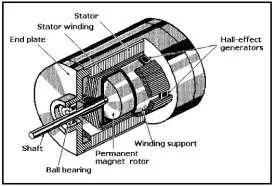
The ESC does the commutator’s old job, only smarter. It tracks the rotor’s position thousands of times per second and times each current pulse to keep the motor spinning cleanly. It relies on electromagnetic induction, the same principle that lets an alternator recharge a battery in a gas mower, just timed with far more precision.
Here’s what happens when you squeeze the bail and start cutting:
- The ESC spins the motor up from a standstill.
- A sensorless algorithm reads back-EMF, the voltage the spinning motor pushes back, to track rotor position without extra sensors.
- When the blade hits thick Zoysia or a wet clump, RPMs dip. The controller senses the drop and feeds more current to hold blade speed.
That last step is the part mowers live on. A brushed motor gets whatever fixed voltage the battery sends, so it simply bogs down under load. A brushless motor fights back, which is why the cut stays even in grass that would stall a cheaper deck.
Brushless vs. Brushed Lawn Mowers: Where the Real Differences Show Up
The real differences cluster in four areas: torque under load, runtime, motor lifespan, and price. On a small, flat, tidy lawn with a fresh battery, you honestly might not notice much. The gap opens the moment conditions get hard.
Torque is the first difference. Aggregate buyer reviews of brushed cordless mowers repeat one complaint constantly: the blade bogs and the cut turns ragged in thick, tall, or damp growth. Brushless models with load sensing hold blade speed through the same grass, so the last pass looks like the first.
Runtime comes next. Because brushless motors waste less energy as heat, the same battery delivers measurably more cutting time. Across spec sheets and buyer feedback, expect roughly 10 to 25 percent more runtime per charge.
On a 45-minute pack, that’s real lawn coverage, not a rounding error.
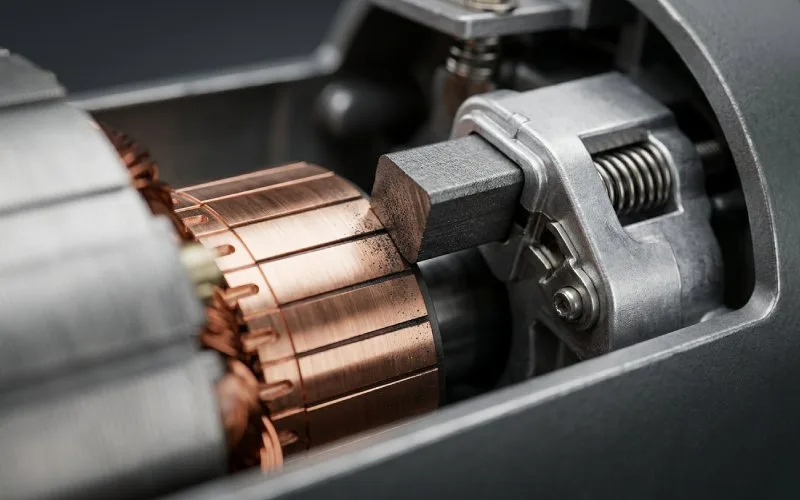
Lifespan is the quiet difference. In a brushed mower, the brushes are a scheduled wear item, often good for only a few seasons of weekend use. A brushless motor has no contacting wear parts, so bearings and the controller become the only realistic failure points.
That’s why several major brands now back brushless decks with 4-year or longer warranties, versus the 2-year norm on brushed models.
| Factor | Brushed | Brushless |
|---|---|---|
| Motor efficiency | About 75 to 80 percent | About 85 to 90 percent |
| Runtime per charge | Baseline | 10 to 25% longer |
| Blade in thick grass | Bogs down | Holds speed (load sensing) |
| Wear parts | Brushes, commutator | Bearings, controller only |
| Typical price | Baseline | About $50 to $150 more |
The honest verdict: if you mow a small, flat lot for 15 minutes every couple of weeks, a brushed model will do the job. Pay the premium when your yard outgrows a single battery, or when your grass fights back.
Brushless vs. Brushed vs. Gas vs. Corded: Side-by-Side Comparison
Each of the four mower types fits a different yard and a different owner. Gas still rules raw power and refuel-anywhere runtime. A Honda or Briggs engine shrugs off wet spring growth that stalls lesser mowers.
The tradeoff is chores: oil changes, spark plugs, filters, keeping gasoline fresh, and chasing sudden exhaust smoke on a cold start. Gas units are also the loud ones at 85 to 95 dB(A), and the EPA’s small off-road engines rules target them for smog-forming emissions.
Corded electric mowers are the budget play. They never need a charge and cost the least by far. The cord is the dealbreaker, though.
You get roughly 100 feet of reach, constant snag risk, and zero hope past a small, open yard.
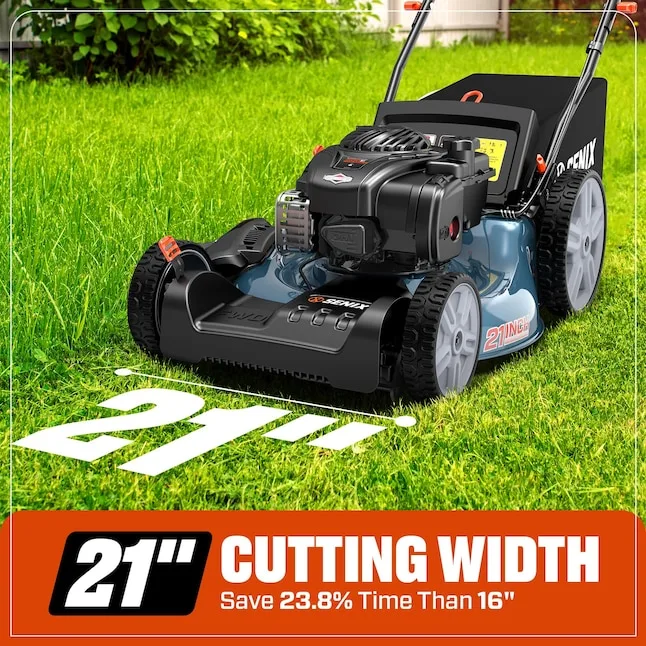
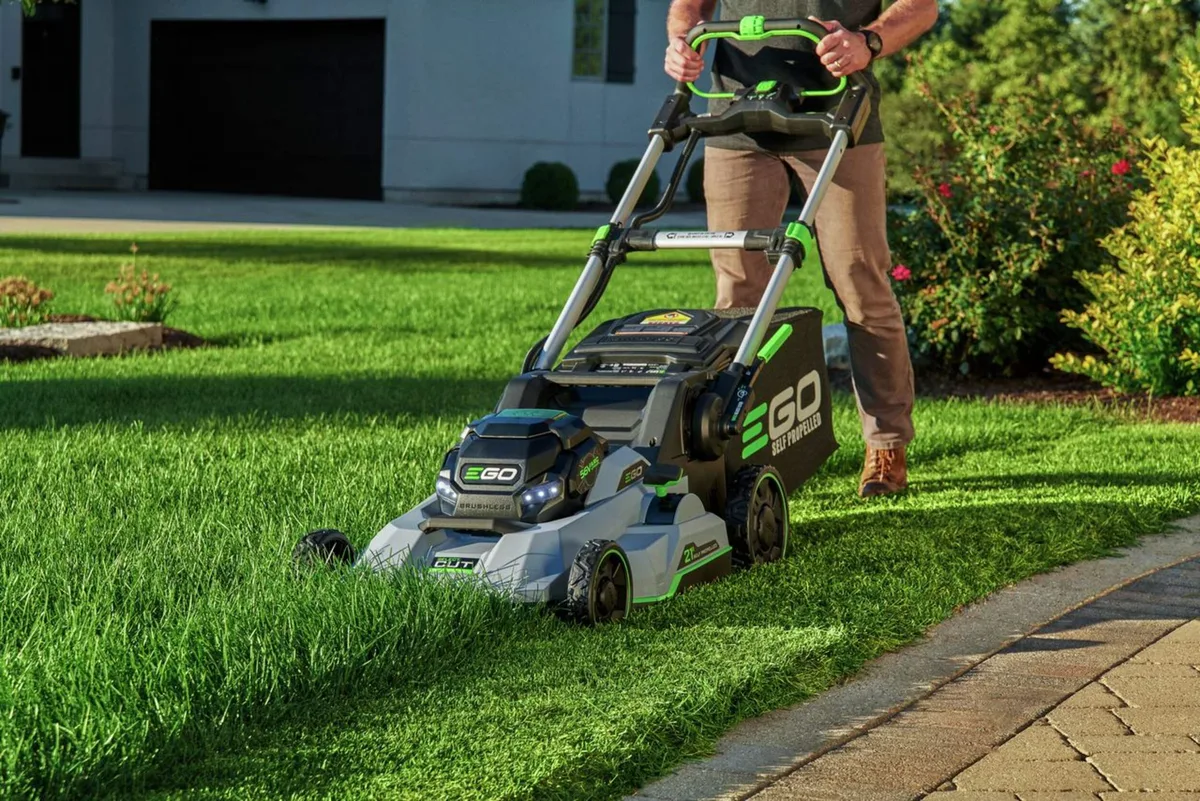
Brushless battery mowers sit in the pragmatic middle. They’re quiet at 65 to 75 dB(A), fume-free, and nearly chore-free, with enough torque for typical suburban turf. As of 2026, EGO’s entire cordless lineup is brushless, and most other brands reserve the tech for their upper tiers.
The table below puts all three head to head.
| Factor | Brushless battery | Gas | Corded electric |
|---|---|---|---|
| Runtime | 30 to 60 min per charge | Unlimited with fuel | Unlimited with outlet |
| Noise | 65 to 75 dB(A) | 85 to 95 dB(A) | 75 to 85 dB(A) |
| Maintenance | Nearly none | Oil, plugs, fuel, filters | Almost none |
| Torque in heavy grass | Good | Best | Fair |
| Typical price | $400 to $700 | $300 to $600 | $150 to $300 |
So who should buy which?
- Brushless battery: most suburban lawns up to half an acre, plus anyone in a noise-sensitive neighborhood.
- Gas: big or rough lots, weeks of neglected growth, or serious wet-season mowing.
- Corded: tiny yards near an outlet where price beats convenience.
- Reel or rider: for tiny flat lawns, old-school reel mowers stay charmingly simple, while lots over half an acre may want riders built for tight turns instead of any walk-behind.
The True Cost of Going Brushless: Premium, Batteries, and Running Costs
The sticker shock is smaller than it looks. Expect roughly $50 to $150 more for a brushless model over a comparable brushed one, per current manufacturer pricing. The bigger long-term number is the battery.
Lithium packs lose capacity with every charge cycle. Most deliver solid performance for 3 to 5 years of typical homeowner use, then fade. Replacement packs run $150 to $400 depending on voltage and amp-hours.
If you keep the mower past year five, budget for one replacement.
Running costs, meanwhile, are almost embarrassing. A typical 56V, 7.5Ah pack stores about 420 watt-hours, so a full charge costs around six cents at average US electricity rates. There’s no oil, no plugs, no fuel stabilizer, and no proper fall storage ritual to protect the engine.
Here’s a rough five-year sketch for a mid-tier push mower:
| Cost item (5 years) | Brushless battery | Gas |
|---|---|---|
| Purchase | ~$500 | ~$400 |
| Energy or fuel | ~$5 | ~$75 |
| Maintenance parts | ~$20 (blades) | ~$100 |
| Major replacement | ~$250 (battery) | Varies (carb, starter) |
| Rough total | ~$775 | ~$575 plus repairs |
On pure paper, a basic gas mower can still win. The gap closes fast when you price your time, carburetor repairs, and the California factor. Under CARB’s small-engine rules, AB 1346 blocks sales of new gas-powered mowers and other small off-road equipment, with enforcement tied to the 2024 model year.
In CARB-follow states, battery is becoming the default, not the upgrade.
And if you’re switching from gas, deal with the old machine responsibly. Retiring an old gas mower means draining the fluids and recycling the metal, not dumping it at the curb.
Pros and Cons of a Brushless Lawn Mower
Every upgrade cuts both ways. Here’s the honest ledger based on manufacturer specs and aggregate buyer feedback.
The wins:
- Longer runtime per charge. Higher efficiency means 10 to 25 percent more cutting from the same pack.
- No scheduled motor wear. No brushes to replace, ever.
- Steady torque. Load sensing holds blade speed in thick grass instead of bogging down.
- Quieter operation. Roughly 65 to 75 dB(A) against 85 to 95 dB(A) for gas.
- Near-zero upkeep. No oil, plugs, filters, or fuel to stabilize.
- Longer warranties. Many brands back brushless decks 4 years or more.
The costs:
- Higher sticker price. Expect a $50 to $150 premium over the brushed equivalent.
- Battery replacement hangs over you. Packs fade after 3 to 5 years and cost $150 to $400 to swap.
- Controller failures are pricey. A burned-out ESC isn’t a $5 fix like a brush swap.
- Cold weather hurts. Lithium packs give up noticeable capacity below freezing.
- Platform lock-in. Once you buy into one battery ecosystem, switching brands means new batteries too.
One more nuance worth knowing. The motor isn’t the only part that ages. Cheap decks, flimsy wheels, and thin blade spindles can outlast-or-outlasted-by nothing, meaning a premium motor sometimes rides on a budget chassis.
In our research, buyer complaints about failing brushless mowers rarely mention the motor itself. They mention handles, wheels, and plastic housings. So judge the whole machine, not just the label on the motor.
The pattern is simple. You’re trading a modest upfront premium for lower running costs, less noise, and a motor that should outlive the battery that feeds it.
Who Should Pay for Brushless (And Who Shouldn’t)
The right answer depends on your yard, not the marketing. Run your situation through this list.
Pay the premium if:
- Your lot runs a quarter acre or more. Extra efficiency buys the runtime that finishes the job on one charge.
- You grow thick, warm-season turf. Zoysia, Bermuda, and St. Augustine all demand torque that load-sensing motors deliver.
- Your yard has slopes. On a hill, a self-propelled brushless deck holds walking pace without the blade fading.
- You mow early or late. Quiet running keeps neighbors and HOAs happy.
- You already own the batteries. Adding a brushless mower to an existing platform softens the price sting considerably.
- You keep equipment for a decade. Longevity is where the motor type pays off most.
Save your money if:
- Your yard is small, flat, and forgiving. Under a quarter acre of tidy fescue, a brushed model finishes the same job in one charge anyway.
- You mow occasionally. A few sessions per season never wears out brushes before the deck dies of old age.
- Budget rules everything. A $250 brushed mower that gets used beats a $450 brushless one that didn’t happen.
A useful comparison table for matching mower to yard:
| Your situation | Best pick |
|---|---|
| Under 1/4 acre, flat, tidy | Brushed or corded |
| 1/4 to 1/2 acre, mixed grass | Brushless push |
| Hills or thick turf | Brushless self-propelled |
| Over 1/2 acre | Brushless dual-battery or gas |
| Occasional light trimming duty | Brushed, spend the savings elsewhere |
The logic lines up with what reviewers see over and over. Brushless pays off through runtime and endurance, so yards that stress either one get the full return. Yards that don’t, don’t.
Brushless Mower Mistakes That Waste Money and Battery Life
A brushless motor forgives a lot. The battery doesn’t. Most of the expensive mistakes happen there.
Storing the pack wrong. Heat kills lithium cells fastest. A pack left in a hot shed or a closed car can lose capacity in one summer. Freezing garages hurt too, though less.
The rule: pull the battery after every mow and store it indoors at room temperature.
Charging at the wrong temperature. Never charge a lithium pack below 32°F. Charging cold cells causes lasting damage. Let the pack warm up first.
Storing batteries dead. Long storage at zero percent pushes cells into deep discharge, and they may never recover. Manufacturers recommend around 40 to 60 percent charge for off-season storage.
Mowing soaking-wet grass. Even a torque-rich brushless deck bogs in sodden clumps. Wet mowing also cakes the underside of the deck and dulls the blade faster. Wait for dry grass.
Cutting too low at once. The one-third rule applies doubly here. Slashing half your blade height forces the motor into peak draw and drains the pack prematurely. Take two passes instead.
Ignoring the blade. A dull blade makes the motor work harder for a worse cut. Sharpen it once or twice per season, and check the hardware before you do, since most blades use reverse threading. Always remove the pack first, and confirm the safe shutdown routine before your hands go anywhere near the deck.
Forgetting the controller has limits. Repeated full-stall events, like jamming the blade on a hidden root, stress the ESC. Clear jammed debris with the battery out, every time.
One more habit worth building. Clean the deck underside after each mow. Grass buildup traps moisture against steel and unbalances the blade.
Two minutes with a plastic scraper protects the motor’s best friend: a smooth-spinning blade.
Brushless Lawn Mower FAQs
Do brushless mowers last longer than brushed?
Yes, usually by a wide margin. Brushed motors fail when their carbon brushes wear out, often within a few seasons of homeowner use. Brushless motors have no contacting wear parts, so bearings and electronics become the only failure points.
Manufacturer warranties reflect this, with brushless decks commonly backed 4 years or longer.
Is a brushless mower worth it for a small yard?
Often not. Small, flat yards under a quarter acre usually finish within a single charge on a brushed model, so the efficiency gains never matter. Pay the premium only if your grass is thick, your lot has slopes, or you value quieter running and a longer service life enough to justify the extra $50 to $150.
Can a brushless mower cut wet grass?
It can, but you shouldn’t. Wet grass clumps, sticks to the deck, and can clog the discharge chute regardless of motor type. Load sensing helps the blade keep spinning, but the cut quality suffers and cleanup doubles.
The CPSC also warns that slick, wet ground raises slip-and-fall risk near a spinning blade.
How long do brushless mower batteries last?
Most lithium packs deliver 3 to 5 years of typical homeowner use, or roughly 500 to 1,000 charge cycles. Capacity fades gradually, so runtime shrinks before the pack dies outright. Replacement batteries cost $150 to $400.
Storing packs indoors at partial charge extends their life noticeably.
Are brushless mowers powerful enough for thick grass?
For typical residential turf, yes. Load-sensing brushless motors hold blade speed through dense Zoysia or overgrown fescue better than brushed motors do. For weeks of neglected growth or heavy commercial work, gas engines still hold the raw-torque edge.
Match amp-hours and voltage to the job, and brushless handles most home lawns comfortably.
The Verdict: When a Brushless Lawn Mower Is Worth the Extra Money
Here’s the whole answer in one place. A brushless lawn mower replaces a wearing mechanical part with smarter electronics, and everything good about it flows from that swap. Higher efficiency, steadier blade speed, longer life, quieter running.
The extra money is worth paying when any of these apply:
- Your lawn runs a quarter acre or more, so runtime matters.
- Your grass fights back with thickness or slope.
- You plan to keep the mower 5 years or longer.
- You’re already invested in the battery platform.
- Noise restrictions or early-morning habits make quiet running valuable.
The extra money isn’t worth paying when:
- Your yard is small, flat, and lightly grown.
- You mow only a handful of times each season.
- The price gap pushes past your budget, because an unused premium mower cuts nothing.
Between the two poles, one test settles it. Estimate your longest mowing session, then check whether a brushed model’s single-charge runtime covers it with room to spare. If yes, buy brushed and pocket the difference.
If it’s close, or if your grass bogs cheaper mowers, brushless earns its keep on the first hot afternoon in June.
For most suburban owners, brushless is the sensible default going forward. Regulations keep tightening around gas engines, battery platforms keep improving, and the price premium keeps shrinking. You’re not buying hype.
You’re buying a motor that skips its own scheduled failure date, which is exactly the kind of engineering worth paying for.